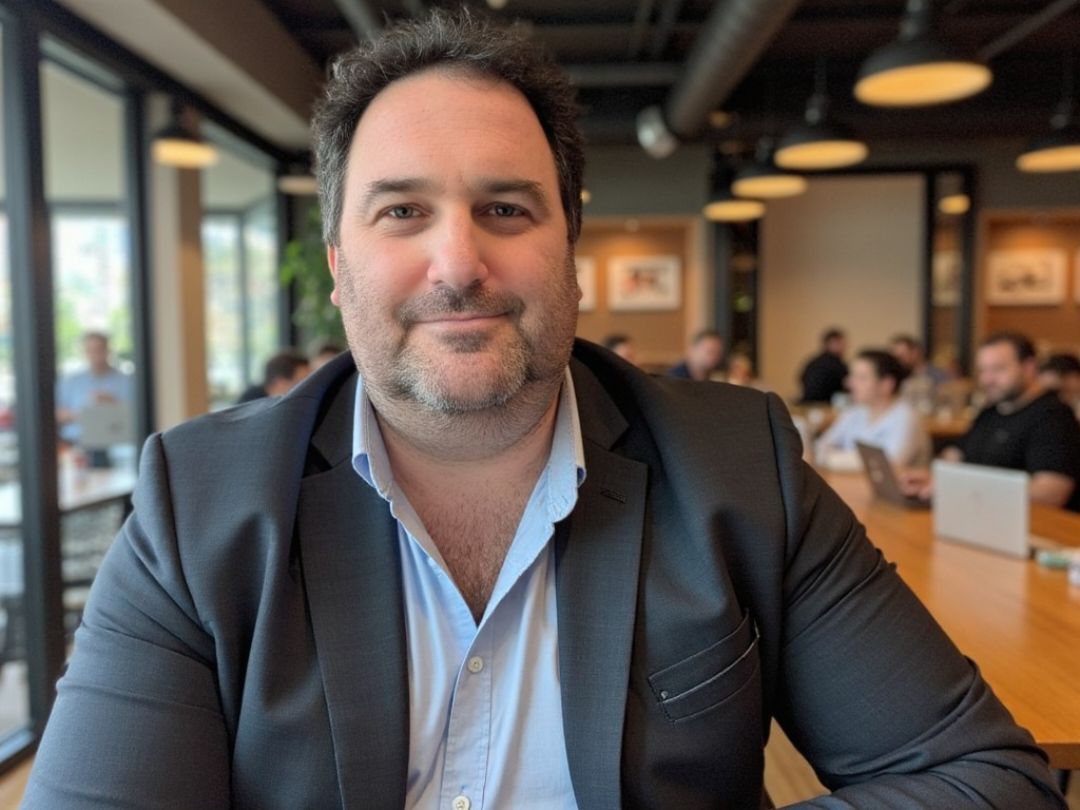
This is my page on the Mandantis site. Mandantis is the firm. I am the founder. Both exist because of a position I have reached after twenty-five years of enterprise delivery: most programs that fail do not fail because the technology was wrong. They fail because the architecture beneath them was never designed. Decisions were made by accident. Workflows formed by accretion. Strategy lived in slide packs, not in structure. Implementers were paid to build on top of all of it. I was one of those implementers. Mandantis is the firm I built to design the layer before the implementers are called.
Now
I work in two places. Most of my week is inside the Mandantis practice, advising organisations on the architecture that has to be in place before AI agents do useful work. We design the layer. We do not implement it. Architectural Stewardship is the only thing we sell on the other side of a recommendation, and Stewardship is governance, not delivery.
The other part of my week is inside an enterprise delivery contract. I have done that work for twenty-five years and I keep doing it because the Mandantis lens has to stay connected to live delivery to stay current. Architecture advice that is not tested against working programs becomes brittle within eighteen months. Mine is tested because I am still there. The contract is not Mandantis work and does not overlap with Mandantis engagements. If you are here to retain Mandantis, that is a separate commercial conversation.
Then
I started in enterprise delivery in the early 2000s, on systems that were the size organisations then thought were big. They were small. The patterns that broke at that scale broke harder when the systems got larger. I learnt to read those breakages backwards into the decisions that caused them, and the decisions were almost never the technical ones.
The middle part of the career was Microsoft-shaped. Dynamics 365, Power Platform, M365, the integration surface around them. I delivered programs at federal and state scale. A federal regulatory agency was one. A Victorian court system was another. Both are public-facing institutions where the cost of an unconsidered workflow lands on people who did not ask to be in the system. That sharpened the position the opening paragraph describes more than any commercial project did.
The most recent stretch has been agents. Not in the demonstrative sense — agents that classify expense reports while everyone applauds the demo. In the operational sense: agents wired into Dataverse, into M365, into governance frameworks built to take their decisions seriously. That work taught me the thing this firm now sells. The architecture in front of an agent decides whether it amplifies competence or compounds error. Most organisations do not have that architecture and do not know they do not have it.
I founded Mandantis in 2025 because nobody else was selling the diagnosis as a discipline, and the firms that came closest were structurally committed to selling implementation on the other side of it. That conflict is unresolvable. Mandantis is the practice that does not have it.
How
The practice has a shape. I write decisions down and number them. The Mandantis decision log runs to several dozen entries. Each one names the choice, the alternatives considered, and the reason the choice was made. The log is internal, available to clients on engagement. I do not believe an advisor who cannot show you how they make decisions about their own firm should be making decisions about yours.
I am vendor-neutral by design, not by claim. Mandantis does not have reseller agreements, kickbacks, or revenue share with any platform vendor. Recommendations naming a specific vendor are rare and evidenced when they are made. Most of what Mandantis recommends is structure, not product. The structure is what determines whether the product works.
I instrument what I build. Every system I touch has telemetry, decision provenance, and a kill switch. The kill switch is not a metaphor. There is a key in a Cloudflare namespace that disables agentic work across my own practice in one second. If I require that of my own firm, I am willing to require it of yours.
I write a lot. The writing is the work, not adjacent to it. Mandantis publishes through Signal because the discipline of writing for an external reader keeps the thinking honest. If you want to know how I think before you decide whether to engage, the published work is the cheapest way to find out.
Reading
The Mandantis Signal publishes the position the firm takes on architecture, agents, and the operating layer beneath both. Selected recent writing is below. The full archive is at insights.mandantis.com.
Impressions Are the Bill.
LinkedIn told me 2,539 people saw my last article. Six of them read it. McKinsey just described the identical failure in enterprise AI spend — and underneath both is the same architecture problem: when you never define the outcome, you end up governing the meter.
The Unsolved Part is Ambition
Most organisations deploying AI are competing on model capability — the part vendors have already settled. The unsolved part is ambition, and it is architecture work.
I've Watched the Same Million-Dollar Mistake Twice
Both times the architecture call was right. Both times the contract that paid me made it almost impossible to say so. Here's the structural reason your delivery partner can't give you the answer you actually need — before you commit the spend.
Talk
If you are responsible for an organisation about to put AI agents into operational work and you are not certain the architecture underneath is ready, the conversation to have is the Architecture Conversation. Forty-five to sixty minutes, no fee. The brief is to determine whether a Blueprint engagement is the right next step for you. If it is not, I will say so.
If you would prefer to read for a while first, the Mandantis newsletter (insights.mandantis.com) is the slower way in. One piece a week, no funnel.
For enterprise delivery contracting outside Mandantis engagements: sean@mandantis.com.
On LinkedIn: linkedin.com/in/seansimmons.